3D product renders vs product photography: which should you use?
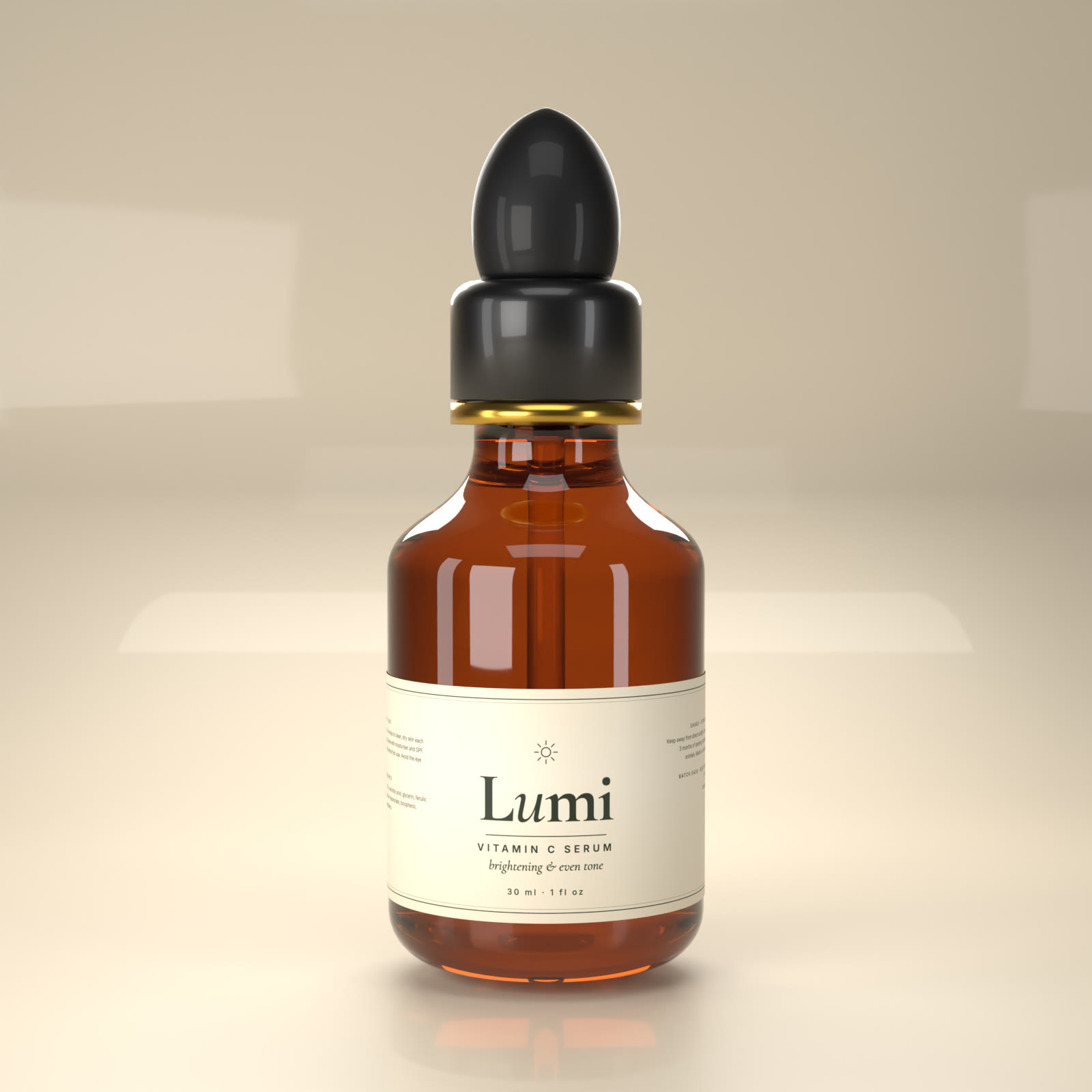
A modern 3D render of a bottle or can can be hard to tell apart from a studio photograph. That does not mean it is always the better choice. Here is how to decide, and what a good render needs from you.
When a 3D render is the better choice
The product does not exist yet. If you are still finalising packaging, a render lets you see the bottle, the label and the colour on a shelf before anything is manufactured. You can fix a typo on a render. You cannot fix it on 10,000 printed labels.
You need many variations. Five flavours, three sizes and two colourways means fifteen shots. In 3D, you change the label texture and re-render with identical lighting. In a studio, each variation is another set-up, another day.
You need impossible shots. A can with condensation, a bottle floating in mid-air, a cream jar opened in slow motion, a perfect turntable that never wobbles. These are natural in 3D.
You need consistent branding across a catalogue. Lighting, angle and background stay the same across every product, which makes a store or a pitch deck look cohesive.
You want motion. The same 3D model gives you still images, a turntable video and short social loops, all from one asset.
When photography still wins
- Real-world texture and imperfection. Fabric, food, skin and anything where natural variation is part of the appeal.
- Lifestyle context. A person holding the product, a kitchen, a bathroom. Photography is simpler for people in real settings.
- Authenticity. For some brands, a real photo carries trust that a render does not.
- One-off simple products. If you have the physical item and need three photos, a photographer may be faster.
Many brands use both: renders for packaging, variants and ads, photography for people and lifestyle.
What makes a render look real
Realism is mostly about materials and light, not model complexity.
- Glass needs correct refraction, a slight tint and highlights that follow the shape. Amber glass, frosted glass and clear plastic each behave differently.
- Metal needs reflections of a believable studio. A can that reflects nothing looks like grey plastic.
- Liquids need volume and a believable surface line inside the bottle.
- Labels must wrap the geometry. A label that is simply placed on top of a model looks flat. When artwork is mapped onto the curved surface, it bends with the bottle and picks up the same reflections as everything else.
- Small details, such as condensation droplets on a cold can, a gold collar on a dropper, or a printed barcode, are what convince the eye.
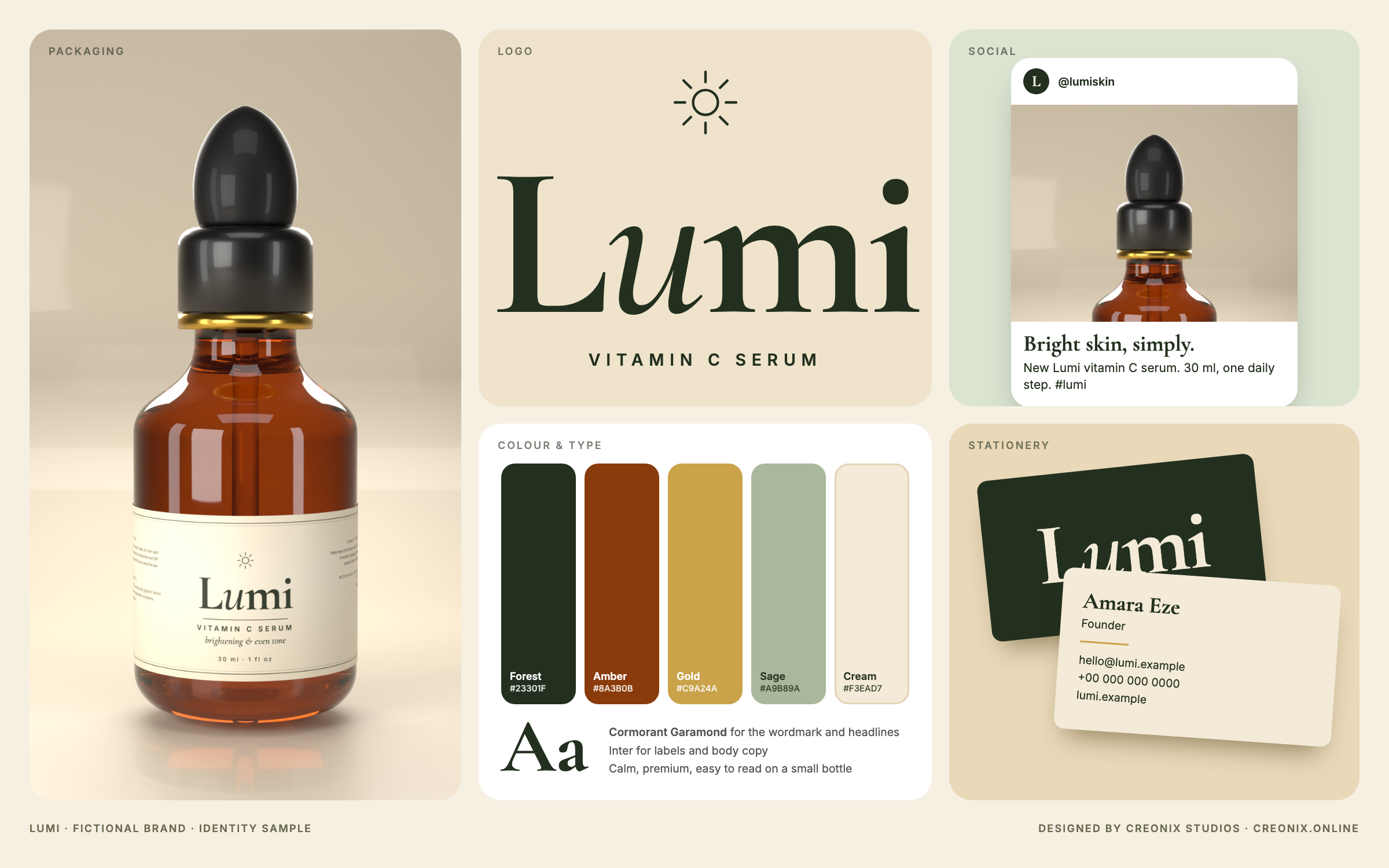
You can see these on our sample brands, which are fictional: Lumi (amber serum bottle), Zing (aluminium can), Velvet (frosted cream jar) and Pura (clear pump bottle). Each label was designed by us, then wrapped on the model. See them on the product renders section of the homepage and drag them to turn them around.
What to send for a 3D product render
- Dimensions. Height, width and a profile of the shape if possible. A technical drawing is ideal.
- Reference photos. Front, side and top of the real product or a sample.
- Label artwork. Flat artwork files at print resolution, plus the exact label size. If you do not have artwork yet, we can design it, see our brand identity checklist.
- Materials. Glass colour, finish of caps and pumps, matte or gloss.
- The shots you want. Hero front, three-quarter angle, turntable, variations, with or without background.
What you get
Typically a high-resolution still on a clean backdrop, optionally a turntable video, and, if you want it, versions on a transparent background for your website or store. For catalogues, we can render a whole range with matching light.
A note on honesty
Product renders are an image of a product, not a photograph of a particular unit. Make sure what you show customers matches what they will receive. If a colour or finish cannot be reproduced exactly, say so.
Ready to see your product rendered? Tell us what you are making.
Want this made for you?
Creonix Studios makes 2D explainers, storyboards, 3D characters and product renders.
Start a project →